
Creating a Retirement Paycheck That Lasts as Long as You Do
The morning you retire instills a sense of freedom and excitement. Then you realize: your salary stops but your bills keep arriving. When you step away from a predictable biweekly salary into the world of self-funded living, things can feel unsettling. You might find yourself wondering how to replace that familiar deposit with a personal income stream that won’t run dry.
Learn how to turn a lifetime of saving into dependable monthly income.
What is a retirement paycheck?
A retirement paycheck is a steady monthly income stream designed to replicate your pre-retirement salary by combining multiple cash sources into a single, predictable payout. These sources typically include Social Security benefits, pension payouts, systematic portfolio withdrawals, and fixed income instruments like annuities.
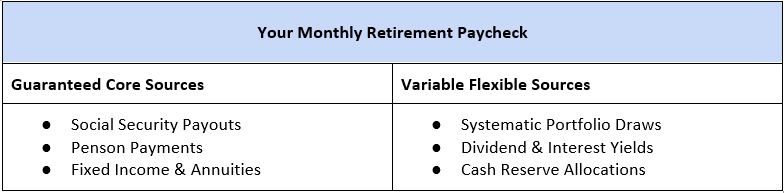
Top strategies to build a reliable retirement paycheck
Constructing an income stream that lasts 30 years or more requires matching specific income sources to your distinct expense types:
- Cover essential expenses with lifetime income. Map out fixed costs: housing, food, healthcare, and insurance, against predictable sources like Social Security, pensions, and income annuities. The Social Security Administration notes that claiming retirement benefits early at age 62 permanently reduces monthly payouts by about 30%, while delaying benefits up to age 70 earns delayed retirement credits that increase your monthly check for each year you wait. Fixed annuities can also provide lifetime income streams, subject to the terms of the contract and the claims-paying ability of the issuing company.
- Set a sustainable portfolio withdrawal rate. Investment accounts fill the gap between your essential costs and discretionary spending, such as travel and dining out. According to research from Vanguard and Morningstar, an initial withdrawal rate near 3.5%–4% supports a 30-year retirement with a high probability of success. Additionally, adjusting distributions dynamically based on market performance helps preserve capital during market downturns.
- Plan for healthcare costs, inflation, and RMDs. Medical expenses often rise faster than general inflation. The IRS sets annual contribution limits for HSAs and IRAs to help offset long-term cost increases, while requiring you to begin taking Required Minimum Distributions (RMDs) starting at age 73. Factoring these mandate rules into your income structure helps avoid unnecessary tax surprises.
Protect your retirement paycheck from market drops
Early-retirement market losses can strain your income because withdrawals from a shrinking portfolio compound the damage. This is sequence-of-returns risk and it’s recommended to hold one to two years of planned withdrawals in cash, so you are not forced to sell during a downturn. That buffer lets the rest of your portfolio recover when markets rebound.
Secure your financial future with confidence
Transitioning from saving to spending is simpler when you have a clear roadmap. Explore our retirement planning services and the tools available in our financial planning resources center to build your custom strategy. If you want to learn more, contact us today to schedule a complimentary, no-obligation retirement income planning consultation with our team.
Frequently Asked Questions (FAQs)
How much can I safely withdraw from my portfolio each year?
Traditional guidelines like the 4% rule suggest withdrawing 4% of your initial portfolio value in year one and adjusting that dollar amount for inflation annually. Modern research indicates a starting rate between 3.5% and 4% offers a high probability of supporting a 30-year retirement, though your exact rate depends on your expenses, lifespan, and market conditions.
When should I claim Social Security, and how does it fit into my plan?
Social Security serves as a foundational, inflation-adjusted income stream. Claiming early at age 62 permanently reduces your monthly payout by approximately 30%, whereas delaying benefits past your full retirement age increases your payout by roughly 8% per year up to age 70.
Can fixed annuities help protect my income against longevity risk?
Yes. Fixed income annuities provide predictable payments for life, helping ensure your baseline expenses remain covered no matter how long you live. All guarantees are subject to the contractual terms and claims-paying ability of the issuing insurance company.
How often should I review and rebalance my retirement income plan?
Meeting annually with a fiduciary financial professional helps ensure your spending rates, tax strategies, and asset allocations adapt to market changes and remain aligned with your long-term goals.
Build an Investment Strategy Tailored for Retirement
The aggressive growth mindset that helped you build your wealth isn’t built to protect it when you stop earning a paycheck. In retirement, shielding your nest egg from market downturns, managing sequence-of-returns risk, and securing reliable cash flow are what truly matter. When your asset allocation directly reflects your real timeline and income needs, you gain the confidence to step away from work without constantly worrying about market swings.
At Peak Financial Freedom Group, we help pre-retirees and retirees in Sacramento and Northern California evolve their portfolios from simple accumulation to long-term distribution and preservation. Your life’s work deserves an investment strategy designed for the life you want to live.
Ready to ensure your portfolio aligns with your retirement goals?
Contact Peak Financial Freedom Group today to schedule your complimentary retirement income planning consultation.
