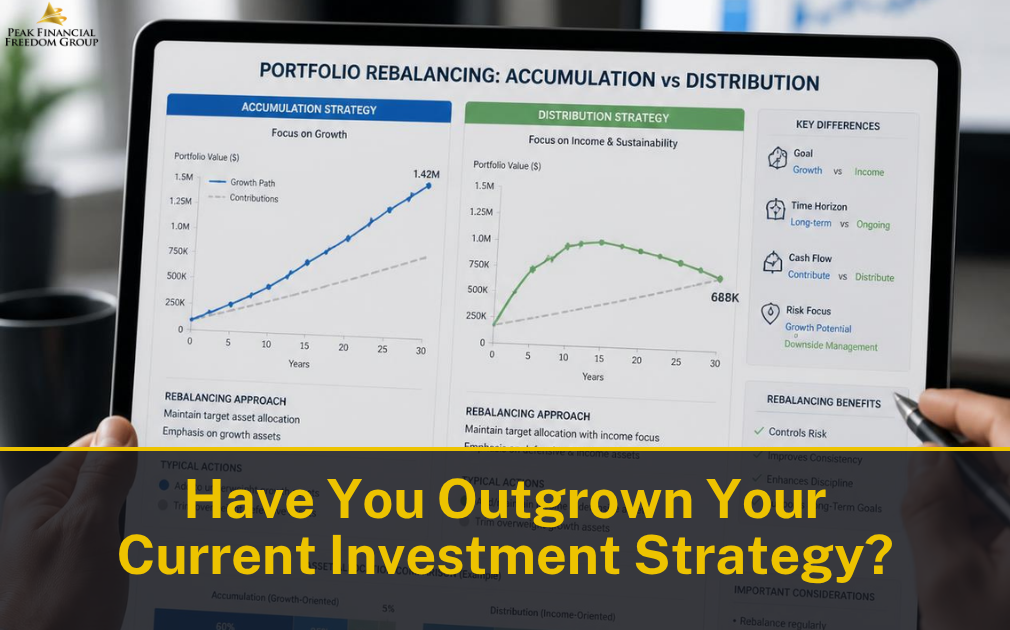
Have You Outgrown Your Current Investment Strategy?
The investment strategy that grew your wealth over decades may not be the one that sustains you through retirement. Many pre-retirees discover their portfolio still reflects the goals of a younger saver.
Portfolios built primarily for growth often create unnecessary anxiety when retirement approaches. Seeing market volatility threaten capital you plan to live on next year feels very different than watching market dips when retirement is decades away.
Let’s explore best practices to protect your wealth while maintaining essential purchasing power.
What is a retirement investment strategy?
A retirement investment strategy is a plan that guides how your savings are invested once you stop earning a paycheck. It’s designed specifically to preserve wealth, manage sequence-of-returns risk, and generate stable cash flow during your non-working years. Unlike growth-focused accumulation strategies, retirement strategies prioritize downside protection, liquidity, and reliable income generation.
Signs you have outgrown your investment strategy
A strategy designed to accumulate wealth during your working years often exposes you to unnecessary risk in retirement. Here are key indicators that your portfolio needs an update:
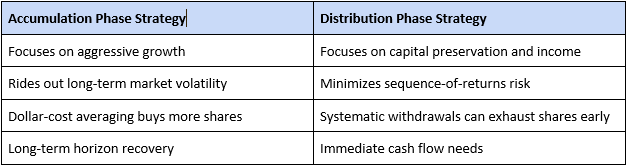
- Your risk tolerance no longer aligns with your timeline. As you age, your time horizon and risk tolerance shift because you have less room to recover from market downturns. Maintaining an aggressive growth focus right before or during retirement exposes your savings to sequence-of-returns risk—where market drops in your initial retirement years disproportionately harm long-term portfolio survival.
- You are missing a formal rebalancing routine. Systematic rebalancing is especially critical for pre-retirees to prevent equity allocations from drifting too high. Rebalancing helps lock in gains, adjust portfolio variance, and maintain a dedicated cash or short-term bond bucket to buffer distributions during market dips.
- Your portfolio does not support active distribution needs. Transitioning from saving to spending introduces unique liquidity demands, tax considerations, and Required Minimum Distributions (RMDs) starting at age 73. Growth-oriented portfolios rarely account for predictable cash flow or distribution safety.
3 key strategies to update your portfolio
Transitioning from a growth mindset to a preservation mindset requires shifting your focus from total return to distribution security:
- Protect immediate liquidity. Holding sufficient liquid assets so you never have to sell equities at depressed prices during market pullbacks.
- Customize risk to your personal timeline. Rather than tracking broad benchmark indexes, aligning your asset allocation directly with your personal income needs and time horizon.
- Incorporate contractual protection tools. Fixed insurance products can offer downside protection and guaranteed payout streams, subject to the terms of the contract and the claims-paying ability of the issuing company.
Align your portfolio with your retirement goals
Your investment strategy should evolve alongside your changing lifestyle and financial priorities. Explore how these strategies fit into a holistic wealth plan on our services page, check our main website here, or browse our financial planning resources.
Contact our office today to schedule a complimentary, no-obligation retirement income planning consultation with our team.
Frequently Asked Questions (FAQs)
How and why should I update my investment strategy when I retire?
Most financial professionals suggest reviewing your strategy at least once a year or whenever your life circumstances change. Growth strategies accept high volatility for long-term gains, but taking distributions during market downturns permanently damages a portfolio’s ability to recover.
How much cash should I keep on hand in retirement?
Most financial professionals suggest keeping 1 to 3 years of living expenses in liquid, short-term accounts to cover income needs without disturbing long-term investments.
What is sequence-of-returns risk?
Sequence-of-returns risk is the risk that market downturns early in your retirement—when you are actively withdrawing funds—will significantly shorten the lifespan of your portfolio.
Are guaranteed income products safe?
Guaranteed income products like fixed annuities offer contractual stability, provided you choose reputable providers, as guarantees are subject to the terms of the contract and the claims-paying ability of the issuing company.
How much risk should I take in retirement?
Your ideal risk level depends on your time horizon, expenses, and income sources. Many retirees may have less tolerance for risk because they have less time to recover from losses.
Confidence Starts with a Predictable Retirement Paycheck
Stepping away from a steady biweekly salary shouldn’t mean stepping into financial uncertainty. Turning a lifetime of savings into a reliable, monthly income stream requires more than guesswork—it requires a coordinated plan that connects Social Security, smart portfolio withdrawals, and guaranteed lifetime income sources to cover your real-world expenses.
At Peak Financial Freedom Group, we have dedicated over 50 years to helping families throughout Sacramento and Northern California replace their paychecks with confidence. We work directly with you to build a personalized, written retirement income plan designed to protect your lifestyle against inflation, taxes, and market dips—so your income lasts just as long as you do.
Ready to build a retirement paycheck you can depend on?
Contact Peak Financial Freedom Group today to schedule your complimentary retirement income planning consultation.
